

From Research to Resilience: Inside the Earth and Space Systems Accelerator
Innosphere's Inaugural Earth & Space Systems cohort advances leading-edge science, contributing contribute to economic growth, technological leadership, and a more resilient region.






The NSF ASCEND Engine connects research, capital, and industry to develop and deploy technologies that strengthen community resilience. This work is more urgent than ever as Colorado and Wyoming face growing threats from wildfire and smoke, one of the lowest snowpacks in recorded history, and increasing weather variability and intensity.
Many of the technologies needed to address these challenges already exist—in university labs and early-stage startups across the country. Innosphere’s Earth and Space Systems (E&SS) Accelerator, aligned with the Engine, is designed to help these startups gain the knowledge, partnerships, and ecosystem support required to globally scale their solutions.
The E&SS Accelerator works with companies at all stages, with a focus on helping commercialize technologies that support well-paying jobs, strong economic growth, community resilience, and science-informed decision-making. With funding from the Colorado Office of Economic Development and International Trade (OEDIT), the inaugural accelerator cohort, which started in late 2025, included fourteen companies.
"Together, the first cohort spans the full arc of translation, from early spinout exploration to market-ready deployment," said Bud Michael, Program Director of the Earch & Space Systems Accelerator.
“This cohort is a powerful reflection of where Earth and space innovation is headed—from satellite technologies and AI-driven decision tools to advanced energy systems and sustainable materials.” - Bud Michael, Program Director of the Earth & Space Systems Accelerator
From Research to Responsible Commercialization
FloodID is one of the inaugural members of the E&SS Accelerator. A web-based flood intelligence and decision support system, “The software can be used for everything from forecasting a flood event, to hindcasting a flood event to show where the greatest impacts were, to providing flood risk information for planning and infrastructure decisions,” said Dr. Kelsey McDonough, FloodID’s product lead and one of the product’s four principals, alongside Hugh Roberts, Zach Cobell, and Mark Bartlett.

FloodID is early in its development and is actively defining its path forward, including its long-term strategy and market opportunities. For McDonough, who is a first-time founder, participation in the E&SS Accelerator has been instrumental in deepening her understanding of entrepreneurship—from pitch development and market strategy to customer discovery.
“I came in with a base understanding of most topics, but getting in and understanding them from a founder’s and investor’s perspective has been really helpful,” she said. “It has tied all the pieces together so I can see the big picture of where we are today and where we want to take FloodID.”
The cohort-based model has also played a key role in FloodID’s development. “One of the really cool things is hearing from other people who are at the same stage of taking a product to market as you,” McDonough noted. “They bring problems to the group that you may not be dealing with today, but that you’re likely to face very soon.”
Building Narrative and Market Signal
PrecisionTerra, another E&SS cohort member, is further along the entrepreneurial journey. CEO and Founder Maithreyi Gopalakrishnan, a seasoned entrepreneur, was drawn to the challenge of bringing deep-tech—and deep-impact—technologies to market. The company is developing a receiver and sensor package that enhances and complements GPS positioning to deliver resilient navigation signals in degraded or denied environments. The potential applications are global, spanning sectors such as agriculture, defense, wildfire response, and emergency management.
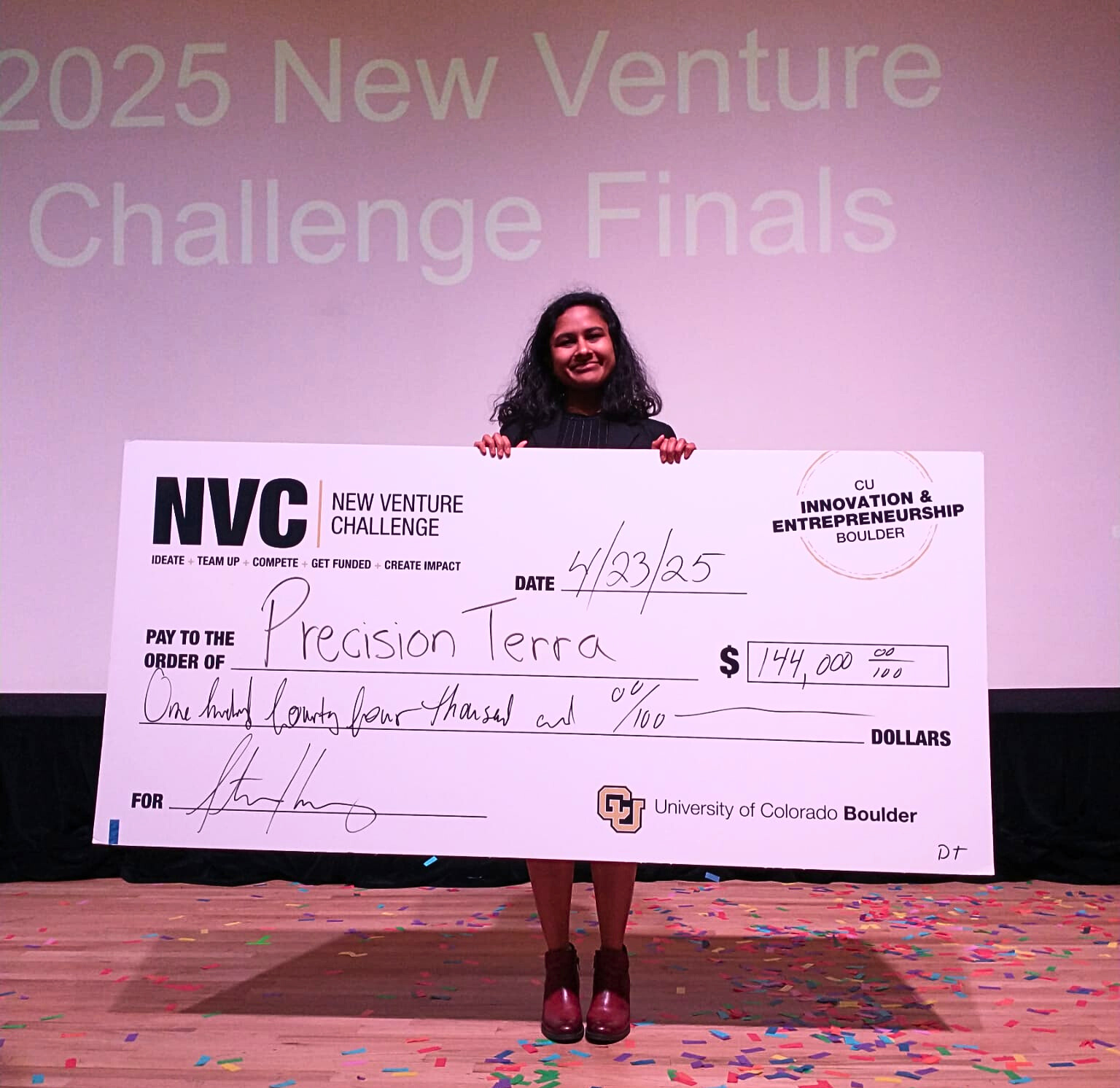
Gopalakrishnan describes the timing of her arrival at PrecisionTerra as a “sweet spot,” where years of research have already yielded patented technology with clear commercial opportunities. Gopalakrishnan was part of the CEO-matching Embark program run by Venture Partners at CU Boulderand research conducted in the lab of Dr. Jade Morton at the University of Colorado Boulder. In the past two years, PrecissionTerra has then build upon this IP to develop a product that is on the doorstep to commercial viability. To date, the company has already secured funding from NASA, the Colorado Office of Economic Development and International Trade, and additional investors including CU Boulder.
Innosphere’s E&SS Accelerator is not Gopalakrishnan's first accelerator experience. She has participated in programs focused on early-stage customer discovery, fundraising, and defense-oriented commercialization. For PrecisionTerra, however, the E&SS Accelerator offered a uniquely aligned value proposition.
The Accelerator has helped her place PrecisionTerra in the broader context of regional innovation. “Each accelerator has its own flavor and emphasis,” she said. “Innosphere has been extremely valuable in putting all the building blocks together to create a compelling story for fundraising.” She believes that having a persuasive narrative is key to attracting and gaining investors.
“When we go to investors, it’s easy to focus on the tactical details—and those are important. But a strong narrative stands on its own and gets your foot in the door. Sharing where you’re going and what your vision is can be incredibly powerful.” - Maithreyi Gopalakrishnan, CEO and Founder of PrecisionTerra
Equally important has been access to Innosphere’s network. “The introductions Innosphere has provided—to people in the industries I’m exploring—have helped me move much faster in customer discovery and truly understand the market,” Gopalakrishnan added.
From Prototype to Proof
CEO and Co-founder of Brint Tech, Kathy Andersen, has built her career at the intersection of deep technology and energy innovation. Through Chevron Studio, she identified and secured mission-driven intellectual property from Colorado State University and co-founded Brint Tech alongside Azer Yalin and Bret Windom to advance next-generation optical gas sensing technology. The company completed the Rose Rock Bridge Venture Studio program in May 2025 and will graduate from Innosphere’s Earth & Space Systems (E&SS) Accelerator in May 2026.
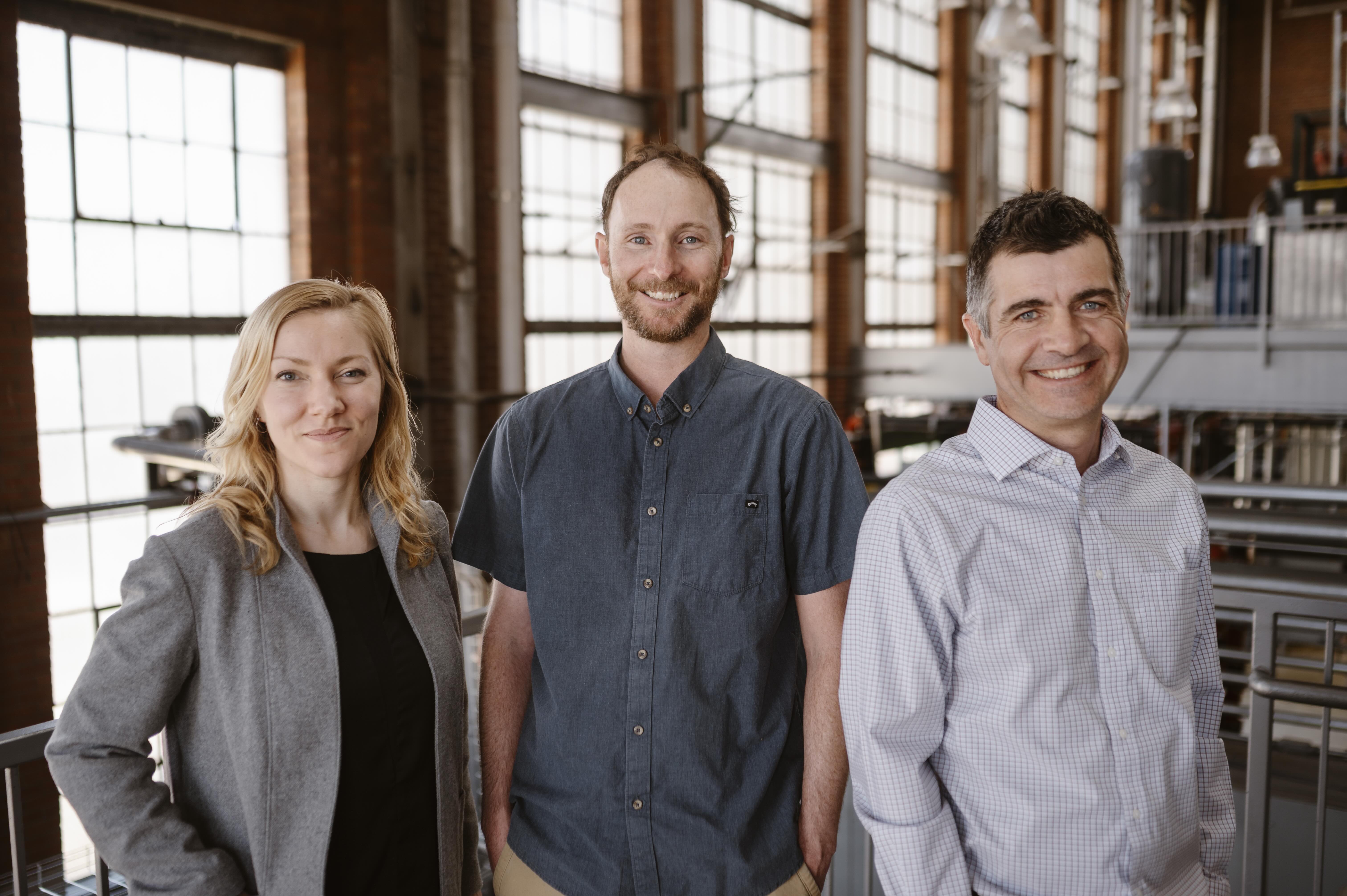
Andersen found the E&SS Accelerator especially valuable for its structured commercialization framework, Mastermind peer groups, and dedicated client director model.
“The accelerator met us exactly where we were in our evolution,” Andersen said. “As we advanced our technology toward field validation, refined our capital strategy, and secured early customer traction, the E&SS program provided the strategic rigor and accountability we needed.”
For Andersen, the client directors are a highlight of the program. “The client director system is very strong, the individuals tapped by Innosphere are highly talented and knowledgeable. Our Client Director is Dan Moyers. We greatly value his perspective in technology translation, leadership, and product strategy,” she said.
With support from the cohort and advisors, Brint Tech has refined its bottom-up market analysis, clarified priority segments within the hydrogen value chain, and applied principles from Disciplined Entrepreneurship to accelerate commercialization. The company is gearing up for validation and field demonstrations in the summer and fall of 2026, positioning itself to support safe, measurable deployment of hydrogen systems at an industrial scale.
Cross-Cutting Insight: What the Accelerator Actually Delivers
The effectiveness of the E&SS Accelerator is not solely a function of selecting strong companies and leaders. Its impact comes from an adaptive model that meets each startup where it is and evolves alongside its needs. Key elements include:
- Stage-aware support, rather than a one-size-fits-all approach
- Peer learning among companies at similar levels of maturity or looking to break into similar industries
- Narrative and market clarity as force multipliers for fundraising and growth
- Ecosystem access as an essential stepping stone to commercialization and scaling
Together, these elements help move technologies from research to real-world impact—strengthening economic growth and community resilience in the process.